South Bend and nearby St. Joseph County
Foundation Repair in South Bend, Explained From the Sand Up
Foundation repair in South Bend often starts in late winter, when a season of lake-effect snow melts into sandy ground and the water table rises toward the basement floor. Most houses in the city were built before 1960, many on concrete block. This site explains the usual repairs with Indiana's code, federal soil and weather records and dated national price guides, and it forwards your request to one independent local specialist.
The median South Bend home was built in 1955 (U.S. Census), and Indiana's code puts St. Joseph County footings at least 36 inches below grade. Angi's 2026 data places most foundation repairs at $2,225–$8,133, and HomeGuide (2025) lists wall anchors at $80–$150 a foot.
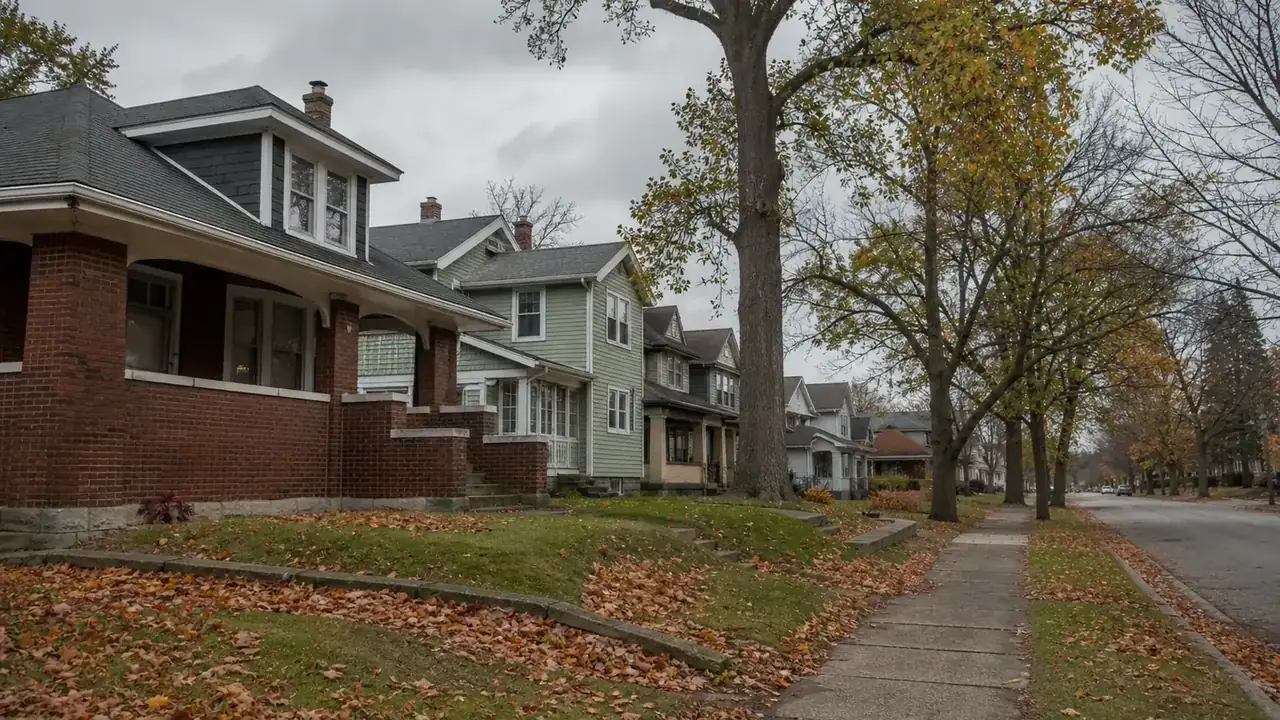
Which foundation repair does a South Bend house need?
Start with what you can see, then match it to a page:
- A horizontal crack along a block wall, or a wall bellying inward: soil and frost pressure. See cracked and bowing block walls.
- One corner, a porch or a stretch of floor that has dropped: something under it gave way. See settling corners and floors.
- Water along the floor edge in March, or after a long rain: groundwater, roof water or both. See basement waterproofing.
- A mark you cannot read yet: see what each sign usually means.
Why is late winter the hard season for South Bend basements?
Because the snow and the groundwater peak together. NOAA's 1991-2020 normals for South Bend Michiana Regional Airport average 64.5 inches of snow a year, 51.4 of it from December through February, and snow cover of an inch or deeper on about 52 days of the year. The National Weather Service office for northern Indiana notes that the city sits under Lake Michigan's influence, about 20 miles from the nearest shore, and that mid-winter through early spring is the wettest part of the year. USDA records for Gilford soil, which fills low, wet hollows in and around the city, put its water table at or near the surface from December to May. When a deep snowpack melts on top of that, water has nowhere to go but sideways, and a basement wall is often in the way.
South Bend foundation problems, one page each
- Cracked and bowing block wallsSideways and stair-step cracks, walls leaning in, and how anchors, straps, steel braces and rebuilding compare.
- Settling corners, porches and floorsWhy part of a South Bend house drops on muck, wet lowland soil or loose fill, and how piers and slab lifting compare.
- Basement waterproofingSnowmelt, a high spring water table and downspouts: find the source first, then compare grading, drain tile, sumps and digging out.
- What foundation repair costs in South BendAngi and HomeGuide ranges with their dates, from one sealed crack to underpinning, and the local factors that push a bid higher.
Ground, warning signs and Indiana paperwork
- What South Bend houses stand onOutwash sand, wet lowland soils, muck and the clay below, from USDA and Indiana DNR records.
- What each foundation sign usually meansRead the house from the outside in: each crack, gap and damp patch answered first, with the page that covers the fix.
- Hiring for foundation work in St. Joseph CountyContractor registration, permits, Indiana's written-contract rule and the code numbers worth checking a bid against.
Mostly sand on top, with clay and muck in places
Much of South Bend was built on sandy outwash left by glacial meltwater. In a sample of 49 USDA soil-map points around downtown, 25 fell in urban land mixed with Tyner loamy sand, a soil the USDA calls excessively drained. That sounds ideal for a basement, and on higher lots it often is. The catch is below and beside it: the Indiana Department of Natural Resources reports thick clay beneath the surface sands in places around South Bend and Mishawaka, and the county also has wet lowland soils and pockets of deep organic muck. Water that drains quickly through sand can stop on clay and sit against a wall, and muck settles under load. The local ground guide goes through each.
Houses from before 1960, on block, brick and stone
The U.S. Census counts 47,775 housing units in South Bend. About 28% were built in 1939 or earlier and another 32% between 1940 and 1959; only 10% date from 2000 or later. About 72% are single detached houses. Many homes of the postwar decades stand on hollow concrete block, and the oldest may sit on brick or stone. Each material fails in its own way: block cracks along mortar joints and bows, brick and stone lose mortar and shed sand. A visit should start by naming what the walls are made of, because that decides which repairs are possible.
Who reads the request you send
South Bend Foundation Desk publishes information and makes referrals; it has no inspectors, engineers or repair staff, and no one from the site will visit. Requests sent through the form reach one independent specialist in foundation and basement water work who covers South Bend and the rest of the county, and that specialist pays the site per referral. Sending one is free, and getting other bids is still up to you.
Questions homeowners ask
Why does my South Bend basement only leak in March and April?
Timing points to groundwater and snowmelt rather than a single crack. Snow that piled up over winter melts into the soil around the house just as the seasonal water table is highest. Check where the downspouts and shoveled snow end up first, then have the walls and floor joint looked at if water keeps coming.
Is sandy soil good or bad for a foundation?
Mostly good. Clean sand drains fast and barely swells, so it pushes less on a wall than wet clay. Trouble comes where the sand sits over clay and holds water against the wall, in low spots where the water table is shallow, and on pockets of muck or loose fill that compress under a house.
Who will be in touch about my request?
A single independent foundation and basement water specialist working in South Bend, rather than a call center or a set of competing firms. They use your notes to ask about the house, and a visit happens only if you agree to one. Whether that first trip carries a fee varies by company, so it is worth asking early.
Sources
- U.S. Census Bureau, American Community Survey 2020-2024: year structure built (B25034), South Bend city, Indiana
- NOAA NCEI U.S. Climate Normals 1991-2020
- National Weather Service Northern Indiana: South Bend climate
- Indiana Department of Natural Resources: Unconsolidated Aquifer Systems of St. Joseph County
- USDA NRCS Official Soil Series Description: Tyner
What is the house doing?
A crack you keep checking, water along the floor after the snow melts, a porch pulling away: one or two sentences is plenty. It goes to one independent foundation and waterproofing specialist who works in South Bend.